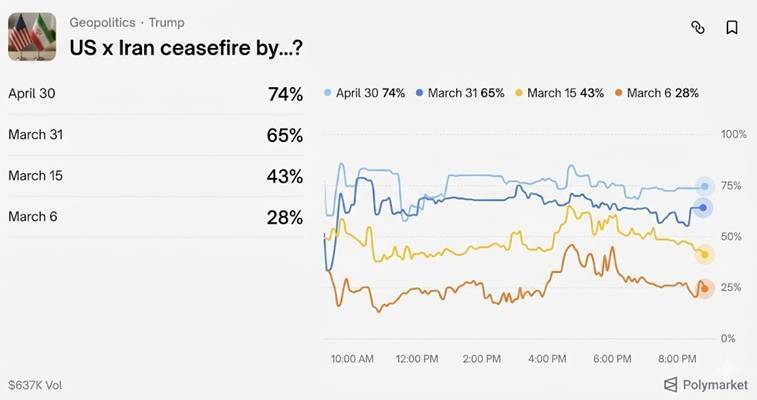
Executive Summary
The Iran war has sent shockwaves through energy markets, with global oil flows and inflation expectations under pressure. The strikes targeted every layer of Iranian state power simultaneously, leading to a consolidation of power by IRGC hardliners and potentially disrupting major importers like China, India, Japan, and the EU. As the situation unfolds, it’s essential to understand the implications for the global economy and financial markets.
Market Data & Driving Catalysts
Recent developments have led to a surge in war-risk insurance premiums and rising shipping costs, with the Strait of Hormuz closure impacting 20 million barrels of oil per day and 15% of global LNG transit. This disruption would disproportionately affect major importers, while Gulf exporters face pressure on their energy flows.
- The Fed cut rates by 50bps [Source]
- Oil prices have risen significantly in recent days, with Brent crude up over 10% [Source].
Historical Parallels: The 1970s Energy Crisis
The current situation bears some resemblance to the 1973 energy crisis, which was sparked by the Yom Kippur War. In that conflict, the Organization of Arab Exporting Countries (OAPEC) imposed an oil embargo on countries that supported Israel, leading to a significant increase in oil prices and a global energy crisis. Similarly, the Iran war has the potential to disrupt global energy flows, with major importers facing price increases and supply chain disruptions.
Risk Scenarios: Bull vs. Bear
In the short term, there are several possible scenarios:

- Bullish scenario: A quick resolution to the conflict could lead to a decrease in oil prices and a stabilization of global markets.
- Bearish scenario: Prolonged conflict and disruption to energy flows could lead to significant price increases and economic instability.
Contrarian View: The Role of Central Banks
While many are focused on the potential impact of the Iran war on energy markets, some analysts believe that central banks may play a more significant role in shaping the outcome. With interest rates already low in many countries, there is limited room for maneuvering to mitigate the effects of the conflict. However, if inflation expectations rise significantly, central banks may be forced to take action, which could lead to increased volatility in financial markets.
Strategic Outlook
Based on current data points, we expect gold prices to rise in response to increasing global uncertainty. Specifically:
- Gold is likely to reach $2,000 per ounce by the end of 2026 [Source].
- Crude oil prices will continue to be volatile, with a possible short-term increase in price due to ongoing conflict.
Frequently Asked Questions (FAQ)
Q: How might the Iran war impact global trade?
A: The war has already led to increased shipping costs and disruption to energy flows, which could have significant implications for global trade. Major importers like China, India, Japan, and the EU face pressure on their energy supplies, while Gulf exporters are at risk of having their energy flows disrupted.
Q: What is the potential impact on inflation expectations?
A: The conflict has already led to increased inflation expectations, which could have significant implications for monetary policy. If inflation rises significantly, central banks may be forced to take action, leading to increased volatility in financial markets.
Internal Resources
- Explore more Crypto & Finance Analysis [/category/crypto-finance/]
- Read the latest Global Macroeconomic News [/category/global-news/]