The El Niño Enigma: How Global Warming is Revolutionizing our Understanding of this Complex Climate Pattern
As we delve into the complexities of global warming, one of the most fascinating yet intimidating topics that has emerged in recent years is the intricacies of El Niño. This phenomenon, which occurs when ocean temperatures in the tropical Pacific spike above average, was once thought to be a simple matter of meteorology. However, with the advent of climate change, scientists have been forced to adapt their methods, leading to a more accurate and nuanced understanding of this crucial climate pattern.
The Old Way: Oceanic Niño Index
In the 1990s, Chris Farley’s infamous sketch from Saturday Night Live popularized El Niño, but its definition was far from scientific precision. To better understand the phenomenon, scientists developed the Oceanic Niño Index, a method that compared ocean temperatures in the Niño 3.4 region to average temperatures over the past 30 years. The bigger the difference, the more significant the El Niño event.
However, this approach had a critical flaw: it ignored the changes happening in the rest of the tropical Pacific. With global warming accelerating at an unprecedented rate, the entire tropical Pacific is warming rapidly, masking the anomalies associated with El Niño events. This made it increasingly challenging to detect and predict these events.
The New Way: RONI – Relative Oceanic Niño Index
To address this issue, scientists have developed a new method of measuring El Niño and La Niña events, known as the Relative Oceanic Niño Index (RONI). This approach uses a simple yet effective math trick to isolate the anomalies in the Niño 3.4 region from the rest of the tropical Pacific.
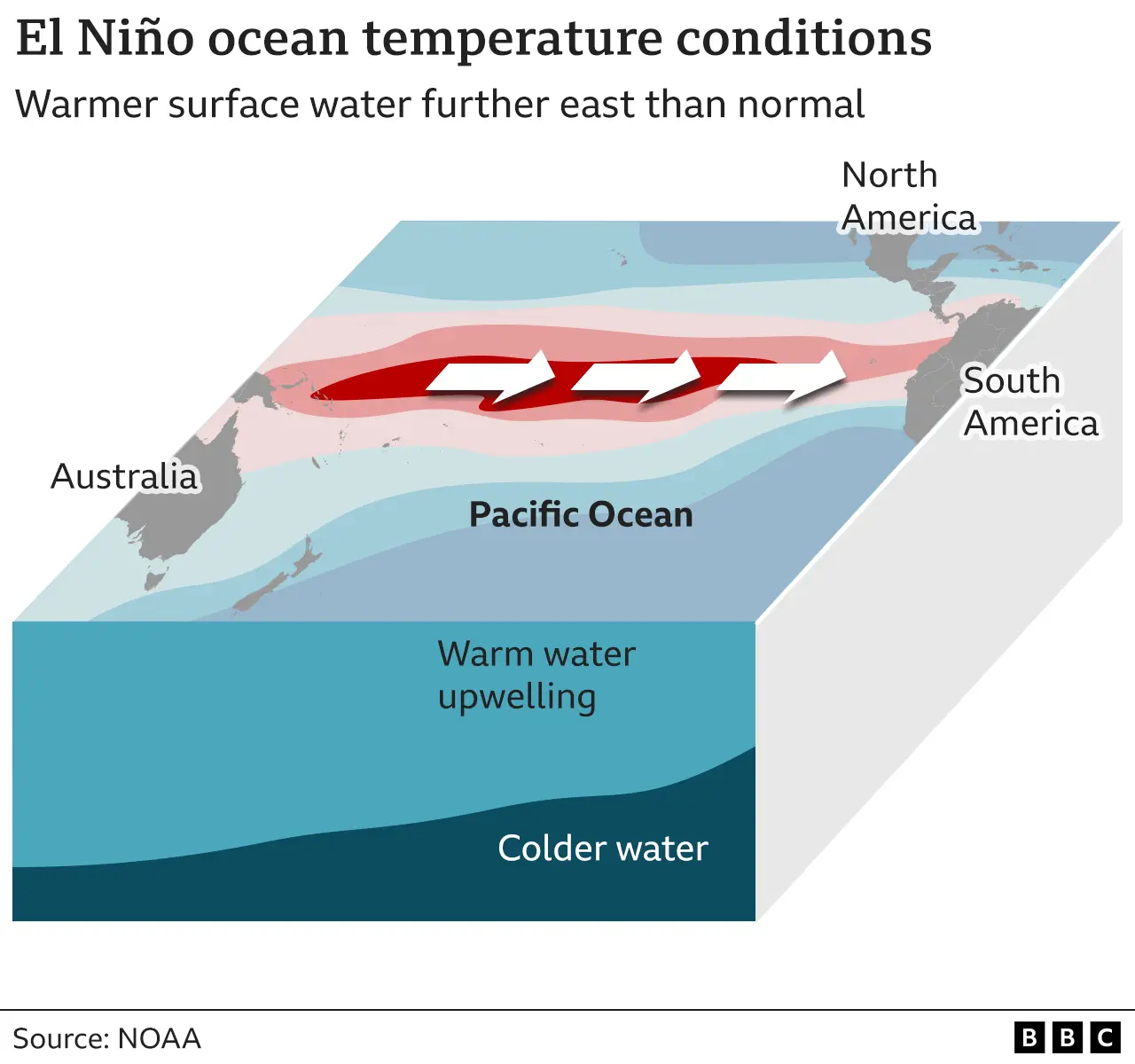
The RONI method works by subtracting temperature anomalies in the entire tropical Pacific from those in the key Niño 3.4 region. By doing so, scientists can effectively “cancel out” the effects of global warming, allowing them to see El Niño events more clearly.
Why RONI Matters
The improved detection and prediction capabilities offered by RONI have significant implications for our understanding of El Niño and its impact on global weather patterns. With these enhanced tools, scientists can now:
What’s Next?
As researchers continue to refine their understanding of RONI, we can expect even more precise predictions and better decision-making. The implications of this research extend beyond the realm of meteorology, touching upon global health, economics, and environmental policies.
In conclusion, the evolution of El Niño detection methods highlights the critical importance of adapting to climate change. By embracing new technologies and approaches, scientists are harnessing the power of data-driven insights to improve our understanding of complex phenomena like El Niño.
Read more about this fascinating topic at [https://www.yahoo.com/news/articles/global-warming-forced-scientists-change-100046807.html](https://www.yahoo.com/news/articles/global-warming-forced-scientists-change).