Global Growth Expected to Slow in 2026: What You Need to Know
The world’s economies have been on a rollercoaster ride of late, and recent data from the World Bank has left investors and policymakers on edge. According to the bank’s Global Economic Prospects report, global growth is expected to slow down significantly in 2026, driven by a combination of factors including trade tensions and policy uncertainty.
In this article, we’ll delve into the reasons behind this forecast, explore what it means for major economies like those in the Middle East, and discuss the potential impact on commodity markets and developing countries. We’ll also examine the underlying trends that are driving this slowdown and what they might imply for the future of global growth.
The Resilience of Global Growth
Despite trade tensions and political uncertainty, the global economy demonstrated greater resilience than expected in 2025. The largest economies, including the US, China, and Europe, experienced stronger-than-expected growth, largely due to a surge in trade before the US tariff hikes and gradual monetary easing.
This surge was driven by a combination of factors, including a strong US dollar, which made imports cheaper, and a rebound in global demand as countries like China and India recovered from the pandemic. The result was a significant increase in exports, particularly for countries that were hit hard by the pandemic, such as Italy and France.
The End of Favorable Factors
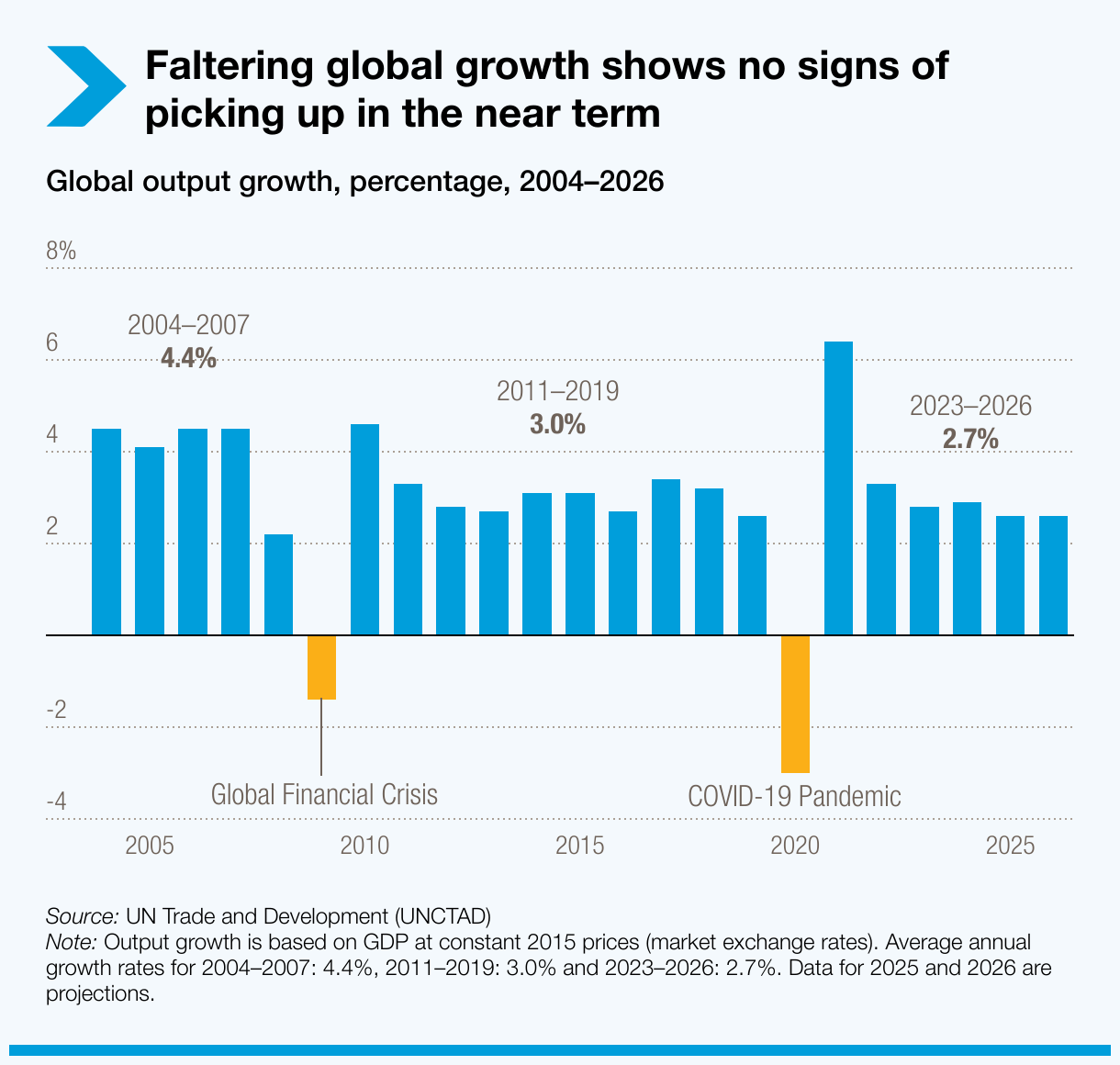
However, the World Bank’s forecast suggests that this favorable trend is unlikely to continue in 2026. As the largest economies experience slower growth, the lagging impact of new trade barriers will come to the fore, leading to a decline in the rate of real GDP growth in several regions and economies.
The US, in particular, is expected to see a slowdown in growth due to the ongoing trade tensions with China and other countries. The US-China trade war has already had a significant impact on global trade, with many countries taking sides or imposing their own tariffs.
The Middle East: A Regional Beacon
However, not all economies are expected to experience slower growth in 2026. The Middle East, particularly countries like Saudi Arabia, is expected to see higher growth due to several factors including:
The Impact on Commodity Markets
Slower growth in major economies will put pressure on demand for energy and industrial goods, negatively impacting commodity markets. This could have significant implications for developing countries that rely heavily on export of these resources and goods.
For example, a slowdown in global demand could lead to lower prices for commodities like oil, which would impact the revenue streams of many developing countries. Similarly, a decline in demand for industrial goods could lead to a decrease in exports, further exacerbating economic challenges.
The Future of Global Growth
So what does this mean for the future of global growth? The World Bank’s forecast suggests that the next few years will be marked by slower growth and increasing uncertainty. However, it also points out that there are many factors that could drive growth, such as technological innovation and investment in infrastructure.
Ultimately, the future of global growth will depend on a combination of factors, including policy decisions, technological advancements, and demographic shifts. As we look to the next few years, it’s essential to stay informed about these trends and how they might impact your investments or business strategy.
Get weekly analysis from New York Times bestselling author George Friedman and our global team of analysts, plus special offers.
Toll Free: 1-888-982-8217
International Callers: 1-512-687-3444
Copyright 2025 Geopolitical Futures. All rights reserved.
Sign up now and receive our special report Understanding our Geopolitical Model